Falling Sand Abrasion Tester
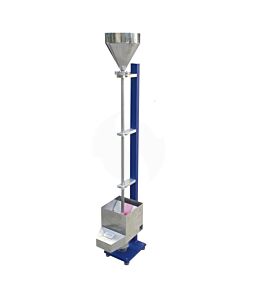
Solvica's Falling Sand Abrasion Tester BGD529 is designed according to ASTM D968. It is applicable to determine the abrasion resistance performance of organic coatings. Abrasive material is allowed to fall from a specified height through a guide tube onto a coated panel until the substrate becomes visible. The amount of abrasive per unit film thickness is reported as the abrasion resistance of the coating on the panel.
The device is compatible with two types of abrasive media, depending on the selected test method:
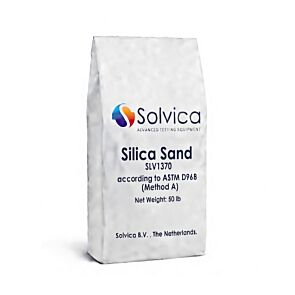
- SLV1370 Ottawa Silica Sand for ASTM D968 (Method A)
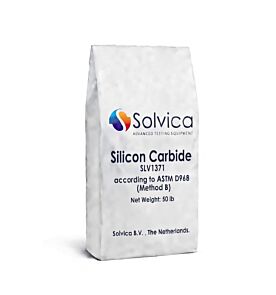
- SLV1371 Silicon Carbide Grain for ASTM D968 (Method B)
Silica sand produces a slower rate of abrasion for organic coatings than that provided by silicon carbide. For some types of coatings, it may also provide greater differentiation. The abrasion resistance scales produced by the two methods differ, but the methods provide approximately the same rankings of coatings for abrasion resistance. Each of the methods has been found useful for rating the abrasion resistance of specific types of coatings. For example Method A (falling sand) has been used for rating floor coatings while Method B (falling silicon carbide) has been used for rating coatings for ship decks.
Method A (falling sand) is the most widely used ASTM D968 test method worldwide. It is the traditional standard for evaluating the abrasion resistance of various organic coatings.